Does Invisalign Hurt? What the First Two Weeks Really Feel Like

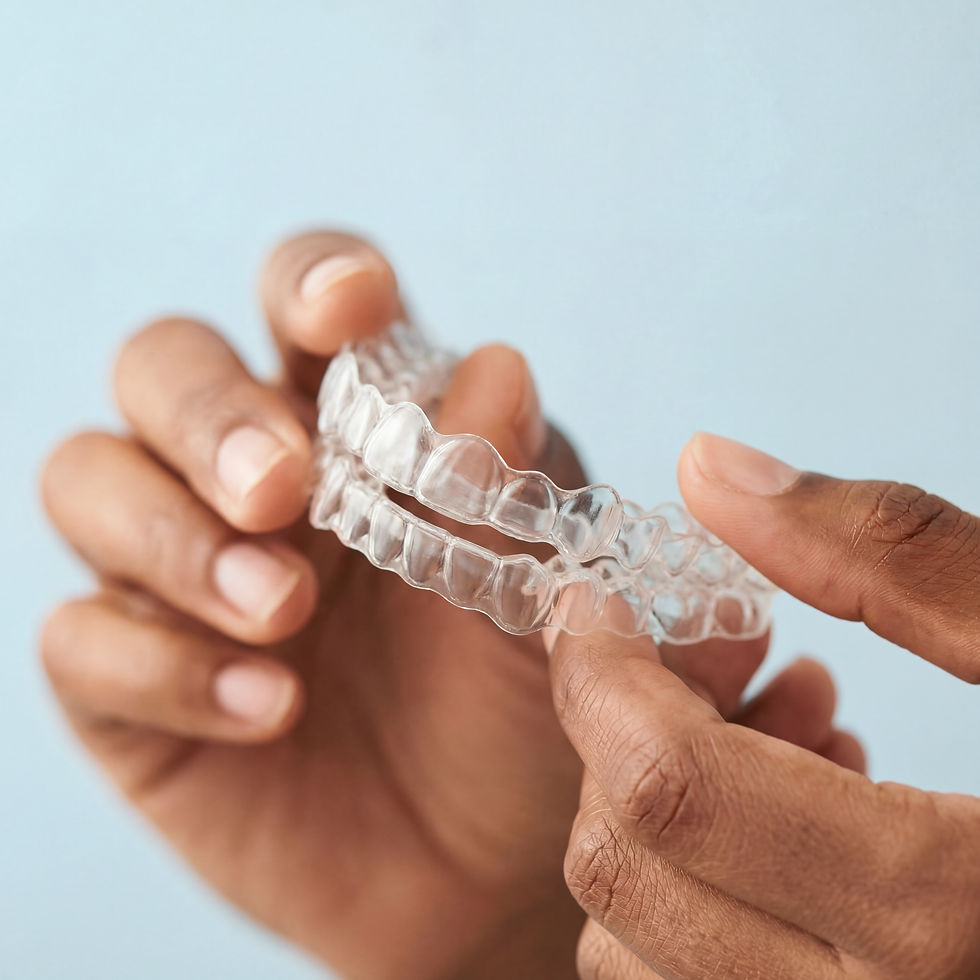
Invisalign does not hurt the way most people picture it. What you feel is pressure, mostly in the first two or three days of each new tray, and it fades as the teeth settle into the new position. The first tray is the biggest adjustment. After that, each new set brings a shorter, milder version of the same thing.

What does the first day with the first tray feel like?
When I seat that first tray in the chair, the word patients use most is "tight." The tray is made to a position your teeth are not in yet, so it grips them and starts nudging right away. Within an hour or two your teeth feel aware of themselves, if that makes sense. You notice them when you bite together, when you run your tongue across them, when you take the tray out for dinner. That awareness is the ligament around each tooth registering a push it is not used to. It is the signal the whole process depends on, so while it feels strange, it is the right strange.
Most people also notice the tray itself more than the pressure on day one. It is a new object in your mouth, your tongue keeps exploring it, and you swallow a little more often. That part goes away faster than you would expect.
Why are days two and three the worst?
The pressure builds for a day or two before it eases. On day one the tray is pushing but the tooth has not moved yet. By day two and three the bone around the root is actively remodeling so the tooth can shift, and that is when things feel the most tender. Biting into something firm, like a crusty roll or an apple, is where you will notice it most. Soft foods for a couple of days make this easy to get through, and plenty of people barely change what they eat.
I tell patients to expect this peak so it does not catch them off guard. If you know day two is going to be the sore one, it is just a day two. If nobody warned you, it feels like something went wrong.
When does it settle down?
By the end of the first week most of the tenderness is gone. The teeth have moved the small amount that tray asked for, the tray fits more passively, and you mostly stop thinking about it. A lot of people hit day five or six and realize they forgot they were wearing anything. That is the pattern you will repeat for the rest of treatment, just in a shorter and gentler form.
Will every new tray feel like the first one?
Each new tray brings a day or two of pressure, and then it fades. The first tray is usually the strongest because everything is new at once. Later trays are a smaller version of the same cycle because you already know the feeling and your mouth has adapted to having a tray in it.
This is also where Invisalign tends to be easier on people than braces. A tray is swapped often, usually every week or two, and each one only moves the teeth a small amount. A braces wire change happens less often and asks for a bigger jump in one visit, so the soreness spikes higher and lasts longer. With trays, you trade one big adjustment for a series of small ones, and small ones are easier to live with.
What are attachments and why do they feel odd at first?
Attachments are small bumps of tooth colored composite that I bond to certain teeth before you start. They give the tray something to grip so it can rotate a tooth or pull it down, movements a smooth plastic shell cannot do on its own. Not every tooth gets one, and they come off cleanly at the end.
For the first few days your tongue and lips will find them constantly. The inside of your lip may feel a little rough where it rests against an attachment, especially when the tray is out. That adjustment period is short. Your lips toughen up a bit, your tongue stops hunting for them, and within a week most patients do not notice them unless they are looking in a mirror.
Will I talk differently?
Some people get a slight lisp with the first tray, mostly on "s" sounds. The tray adds a thin layer over the back of the front teeth, which is exactly where your tongue goes to make that sound, so it needs a little time to recalibrate. Reading out loud for a few minutes at home speeds this up. For most people the lisp is gone within a week or two, and plenty of people never get one at all. If it bothers you at work, know that you hear it far more than anyone listening to you does.
What if the tray edge rubs my cheek or gum?
Every so often a tray edge sits a little high along the gumline or has a slightly sharp spot that catches your cheek. This is not something to tough out. You can smooth a small rough spot yourself with a clean emery board or a nail file, working gently right along the edge. Orthodontic wax pressed over the spot gives your cheek a break while the tissue heals. If the same spot keeps rubbing on tray after tray, call us. That usually means the trim line needs adjusting and it is a quick fix in the office. We keep wax and a few other small helpers on our recommended products page if you want to have some on hand before you start.
What are chewies and do I really need them?
Chewies are small soft cylinders you bite on for a few minutes after putting in a tray. A tray can feel like it is in when it is actually sitting a hair short of fully seated, and a tray that is not fully seated is not moving the tooth it was designed to move. Biting on a chewie pushes the plastic all the way down onto the teeth and onto the attachments. I ask patients to use them every time they put a tray in, especially the first day or two of a new set, and any time a tooth feels like the tray is floating over it.
Should I switch trays at night?
Yes, and this is the single most useful habit I can give you. Put the new tray in right before bed. The first several hours are when the pressure builds the most, and if you are asleep for them you skip the part people most often complain about. You wake up a little tender instead of spending an evening noticing it. Bite on your chewies for a few minutes before you fall asleep so the tray is fully seated going into the night.
Can I take something for the soreness?
If you want to, an over the counter pain reliever used only as directed on the label is reasonable for a day or two with a new tray. Many patients never need it. Cold water helps more than people expect, and sticking to softer foods on tray change days does most of the work on its own. If you find yourself needing medication for more than a couple of days with every tray, that is worth a conversation with me rather than just continuing.
What is not normal?
Pressure spread across several teeth that eases over a few days is the expected feeling. A few things are not, and they mean you should call us rather than wait for the next tray.
Sharp pain centered on one tooth is different from pressure. If one tooth stands out as the problem, especially if it is tender to tap or sensitive to cold in a way that lingers, I want to look at it. A tray that will not seat, meaning you can see a visible gap between the plastic and the biting edge of a tooth after using your chewies for a day or two, means that tooth is behind schedule and pushing ahead will not fix it. Bleeding gums that persist beyond the first few days, or gums that are swollen and sore around the tray line, usually point to a hygiene issue or a tray edge problem, and I cover what that can mean in Why Are My Gums Bleeding. If something feels urgent after hours, our emergency dentistry page explains how to reach us, and I wrote up what to do in the meantime in Dental Emergencies: What to Do Before You Can Reach Us.
One more thing worth knowing. Soreness means the tray is working. A tray that feels like absolutely nothing after day one is worth a second look, because the most common reason is that it is not fully seated and is not doing its job.
Frequently asked questions
How long does Invisalign hurt after a new tray?
Usually one to three days of pressure, peaking around day two, then fading. By the end of the week most people forget they are wearing a tray until they take it out to eat.
Is Invisalign less painful than braces?
For most adults, yes. Trays are changed often and move teeth in small steps, while braces wires make bigger adjustments spaced further apart, so the soreness with braces tends to spike higher.
Do Invisalign attachments hurt?
Bonding them does not hurt. The adjustment is your lips and tongue getting used to small bumps on the teeth, which takes a few days to a week.
Will Invisalign give me a lisp?
Sometimes, and mildly. It usually fades within a week or two as your tongue adapts. Reading aloud at home shortens that window.
Can I skip the chewies?
I would not. A tray that is not fully seated is not moving the teeth it was built to move, and chewies are the easiest way to make sure it is.
Is Invisalign right for me in the first place?
That depends on what your teeth need and how consistently you can wear trays. You can read about how we approach treatment, and what we look for at the first visit, on our Invisalign page.
Thinking about starting?
If you are considering Invisalign and want to know what your own first two weeks would look like, give us a call or text at 425.643.5778 or request an appointment. I am happy to look at your teeth, show you what the attachments would involve, and give you a realistic picture before you commit.
Reviewed by Dr. Victor Bauer, DDS. Last updated November 2026.
Dr. Victor Bauer, DDS is a general dentist and the owner of Family Dental Care of Bellevue, located in the Factoria neighborhood of Bellevue, WA. He provides comprehensive family care including dental implants, Invisalign, and same-day CEREC crowns. Questions about your smile? Call 425.643.5778 or request an appointment.