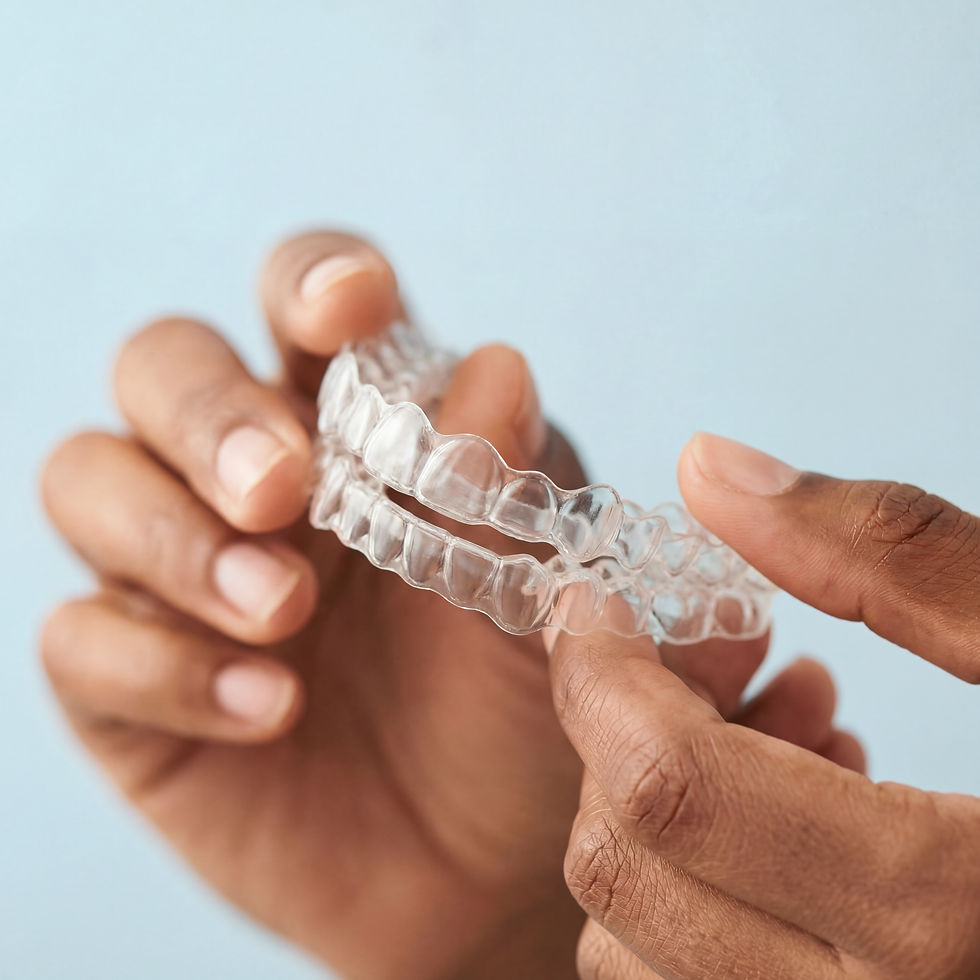
Invisalign vs Braces for Adults: Which Is Actually Better?

Neither one is better across the board. Braces win for complex bite problems, big rotations, and anyone who knows they will not keep trays in. Invisalign wins for crowding, spacing, mild to moderate bite issues, and teeth that have drifted after old braces. The right answer depends on your teeth and your habits, and I will walk through both.

Why would a general dentist who offers Invisalign tell you braces are sometimes better?
Because it is true, and because I would rather you get the right treatment than the one I happen to have in the office. I offer Invisalign in Bellevue and I do not treat with braces, so I have no financial reason to steer you toward brackets. That cuts the other way too. If I tilted every adult toward aligners, I would end up with a handful of cases that stall at month fourteen because the teeth needed more than plastic can deliver. I have seen that happen in other offices and I do not want it in mine. So when I look at your scan and your bite, I am asking one question: which tool actually finishes this case well? Sometimes that is Invisalign in my chair. Sometimes it is a referral to an orthodontist for braces, and I make that referral without hesitation.
What does each one do best?
Braces are the fixed equipment, and they earn their place with two kinds of patients. The first is the patient who knows, if they are being honest with themselves, that aligners are going to spend half the day sitting in a case. Trays only work while they are in, and braces do not care whether you cooperate, so for that person brackets are simply the more reliable choice. The second is the patient whose teeth need more than aligners can give. A bracket is glued to every tooth and a wire runs through all of them, so the orthodontist has direct, continuous control over each root. That matters when a deep overbite or underbite needs the jaws coaxed into a different relationship, when a tooth is rotated nearly sideways, when a canine is stuck high in the gum and has to be pulled down into the arch, or when several teeth have to travel long distances in different directions at the same time. Some teeth are also just the wrong shape for plastic to grip, short or rounded or tipped in a way that a tray slides over without ever getting hold of. In those mouths, aligners will stall no matter how faithfully they are worn, and braces are the tool that actually finishes the job.
Invisalign shines with crowding, where the front teeth overlap because there is not quite enough room. It handles spacing well, closing gaps between teeth. It does a nice job on mild to moderate bite problems, the kind where the bite is a little off but the jaws are basically where they belong. And it is my favorite tool for relapse cases: the adult who had braces at fourteen, lost the retainer in college, and now has lower front teeth that have shifted back into a crooked row. Those teeth already know where they are supposed to be, and aligners walk them home nicely. If you want a deeper look at whether your case fits, I wrote a companion post, Is Invisalign Right for Me, that goes through the specifics.
Which one is easier to live with at work?
This is usually where adults start the conversation, and I understand why. Metal brackets are visible. Clear ceramic brackets are less obvious but still show, and the wire still runs across your teeth. If you give presentations, sit across from clients, or are in a lot of video meetings, you will think about it every time you smile for the first few months. Most people stop noticing after a while, but the adjustment period is real.
Aligners are close to invisible from a normal speaking distance. Someone standing next to you at the coffee machine might notice a slight shine on your teeth, and the small tooth-colored attachments we bond on to give the trays grip can show a bit up close. There is also a mild lisp for the first few days with each new set while your tongue figures out the new shape. It fades fast. For most working adults, this is the category where Invisalign pulls ahead, and I think it is a legitimate reason to care, not a vanity one. You are more likely to finish treatment you are not embarrassed by.
Which is harder on your teeth and gums?
Here is where my conservative side comes out. With braces, you have a bracket and wire sitting on every tooth for a year or two, and food catches on all of it. Brushing around brackets is slow and awkward, flossing requires threaders or a water flosser, and plenty of adults who were diligent before braces end up with inflamed gums and little white spots around the brackets when they come off. Those white spots are early decalcification, the first stage of a cavity, and they are permanent. If your gums bleed when you brush now, that is worth sorting out before you add hardware. I covered why in my post on bleeding gums.
Aligners come out. You take the trays off, brush and floss exactly like you always have, put the trays back in, and nothing is in the way. That is a real advantage for gum health and cavity risk, with one important catch: the trays only protect your teeth if you clean them before you put the trays back in. If you snack, skip brushing, and snap the trays on, you have just sealed sugar against your enamel for the next few hours, which is worse than no trays at all. So the hygiene edge goes to Invisalign, but only for people who respect that rule. Either way, keep your regular cleanings on schedule during treatment, and if you are not sure what kind of cleaning you actually need, I explained the difference in Not All Cleanings Are the Same.
What about eating and everyday life?
Braces come with a list. No popcorn, no hard candy, no biting into whole apples or corn on the cob, nothing sticky that can pull a bracket off. Most adults manage fine, but a popped bracket means an extra trip to the orthodontist and a few lost days of progress, so the list matters.
Aligners have no food list at all, because you take them out to eat. Steak, apples, caramel, whatever you like. The trade is that you have to take them out every single time you eat or drink anything other than plain water, then brush, then put them back. Coffee is the one I get asked about most. Hot coffee warps the plastic and stains it, so it is water only while the trays are in. For some people that is no problem. For the person who sips a latte over two hours every morning, it is a real change in routine, and that two hours of trays sitting in a case starts eating into your wear time. Think about your actual day, not your ideal day, when you weigh this.
Which one hurts more?
Both move teeth, and moving teeth is uncomfortable. The pattern of the discomfort is what differs, and I think this is one of the more useful things to understand before you choose.
With braces, you go in every six to eight weeks, the orthodontist changes or tightens the wire, and that single adjustment asks the teeth to make a fairly big jump. The pressure peaks over the next two or three days, your teeth feel tender when you bite, and then it tapers off over the following week or two. Big spike, long gap, repeat.
With Invisalign, you change to a new tray every one to two weeks, and each tray only moves the teeth a fraction of a millimeter. So the pressure is milder, but it comes back more often. You feel it for the first day or two of each new set, then it settles, then you switch again. Smaller bumps, close together. Most of my patients find the aligner pattern easier because it never gets intense, but a few would rather have a rough weekend every two months and forget about it in between. Neither is wrong. The brackets themselves also rub the inside of your lips and cheeks, especially early on, which is a kind of soreness aligners simply do not cause.
Does it matter how disciplined you are?
More than any other factor on this page. Braces are glued to your teeth and they work whether or not you cooperate. You cannot forget them at home or leave them in a napkin at a restaurant. Short of eating things you were told not to eat, there is no way to slow them down.
Invisalign only works while it is in your mouth, and that means 20 to 22 hours a day, every day. The trays are fitted to where your teeth should be next week, not where they are now, so when they are out, the teeth are not moving. Drop to 16 hours a day and treatment stretches out, the next tray stops fitting, and we end up ordering new ones. I say this to every adult who sits down for a consult, and I say it without judgment: if you know yourself and you know the trays are going to end up in your pocket, braces are the better choice for you, full stop. It is not a character flaw. It is just the wrong tool for how you live. The people who do best with aligners are the ones who treat them like glasses, in all the time except meals and brushing.
Which one is faster?
For the straightforward cases that aligners handle well, Invisalign is often a little faster, somewhere around six to eighteen months depending on how much the teeth need to move, and the main variable is wear time. For complex cases, braces are usually faster and more predictable, because the orthodontist can make moves that aligners struggle with instead of fighting the plastic for an extra six months. So the question is less "which is faster" and more "which is the right tool," because the right tool is almost always the faster one. A case that is wrong for aligners gets slow. A case that is wrong for braces does not really exist, it is just more hardware than you needed.
How many appointments are we talking about?
Braces mean a visit to the orthodontist every six to eight weeks for an adjustment, and those visits take some time because the wire has to come out and go back in. Over a two year case that adds up to a fair amount of time off work.
Invisalign appointments are fewer and shorter. I usually see aligner patients every six to ten weeks, and most of those visits are a quick check that the trays are tracking, a few minutes of polishing attachments if needed, and handing over the next several sets. Many of them are in and out in fifteen minutes. The trays are pre-planned from your digital scan, so the work happens up front at the computer instead of at every visit in the chair. For busy adults that difference is meaningful, and it is part of why I can offer this in a general practice that focuses on comprehensive dentistry rather than only orthodontics.
What happens after treatment ends?
This one is a tie, and I want to be plain about it because people often assume aligners mean no retainer. Teeth want to drift back toward where they started, and that pull lasts for years after any kind of orthodontic treatment. Whether you finish in braces or aligners, you will wear a retainer, usually full time for a few months and then at night more or less indefinitely. The retainer is the same clear plastic style for both. Skip it and you will be back in a few years with the relapse case I described earlier. So do not let retention tip your decision either way. It is identical.
So which should you choose?
If your case is on the complex end, braces with an orthodontist will likely finish it better, and I will tell you that in the consult and give you a referral. If you know you will not keep trays in, braces again, no shame in it. If your teeth are crowded, spaced, mildly off in the bite, or have shifted since your teenage braces, and you can commit to 20 to 22 hours a day, Invisalign is the gentler, more discreet, more flexible path, and I can plan it from a scan right here in Factoria. Some patients also pair aligners with whitening or bonding at the end, which is where straightening starts to blend into cosmetic dentistry, and we can talk about that once the teeth are where they belong.
Frequently Asked Questions
Am I too old for Invisalign or braces?
No. Healthy teeth and healthy gums move at any age. Adults move a little more slowly than teenagers and the bone is less forgiving of rushing, but I have treated patients well into their sixties. The real requirement is that your gums are stable before we start.
Will Invisalign fix my overbite?
Mild to moderate overbites, often yes. A severe overbite where the jaws themselves are out of position usually does better with braces and sometimes additional appliances, and that is a case I refer to an orthodontist.
Can I switch from braces to Invisalign partway through?
Sometimes. If the hard movements are done and what remains is fine tuning, finishing in aligners is possible. Your orthodontist would make that call based on where the teeth are.
Does Invisalign cost more than braces?
They are usually in a similar range, and the price depends more on how long and complex your case is than on which system you pick. Many dental plans with orthodontic coverage apply the same benefit to either one. We check your plan before you commit to anything.
Will aligners help with jaw pain or clenching?
Not directly. Aligners straighten teeth, and while a better bite can take some strain off the jaw, clenching and grinding are a separate problem. If that is your main concern, start with my post on TMJ treatment in Bellevue with Xeomin [VERIFY SLUG].
What happens if I lose a tray?
Call us. Usually you move to the next tray a little early or go back to the previous one until a replacement arrives. A few days is not a disaster. A few weeks without trays is, so do not wait.
Not sure which side of the line your teeth fall on?
Come in and let me look. A scan and a bite check take about twenty minutes, and I will tell you plainly whether Invisalign makes sense in my chair or whether braces with an orthodontist is the better route. Call or text 425.643.5778 or request an appointment.
Reviewed by Dr. Victor Bauer, DDS. Last updated October 2026.
Dr. Victor Bauer, DDS is a general dentist and the owner of Family Dental Care of Bellevue, located in the Factoria neighborhood of Bellevue, WA. He provides comprehensive family care including dental implants, Invisalign, and same-day CEREC crowns. Questions about your smile? Call 425.643.5778 or request an appointment.