Professional Teeth Whitening vs. Whitening Strips: Which Is Right for You?

Updated: 1 day ago

Whitening strips and professional whitening use the same basic ingredient, peroxide, so both work. The differences are strength, fit, and speed. Strips are a fine starting point for mild yellowing on healthy teeth. Custom trays or an in-office session make sense when strips plateau, when teeth are sensitive, or when you have a date on the calendar.
If you want the full picture of what we offer, the cosmetic dentistry page covers the whitening we stock along with veneers and bonding.
Do whitening strips actually work?
Yes, they do. Strips carry a low concentration of peroxide, and they make up for it with time. Worn daily over a couple of weeks, that peroxide soaks into the enamel and breaks apart the stain molecules that have settled in. The chemistry is the same thing I use in the office, just in a gentler dose.
The real limitation is not the gel. It is the fit. A strip is a flat piece of plastic, and your teeth are not flat. It does not tuck into the spaces between teeth, and it does not follow the curve of each tooth where it meets the gum. So the middle of your front teeth gets whiter, the edges and the areas near the gumline lag behind, and the result can come out a little patchy. The other common complaint is that gel squeezes out onto the gums and stings, which is just peroxide sitting on soft tissue that was never meant to hold it.
For mild yellowing on healthy teeth, you should expect a modest, visible change over about two weeks. That is a reasonable outcome, and for plenty of people it is all they wanted.
What is different about professional whitening?
Two things, and neither is a secret ingredient.
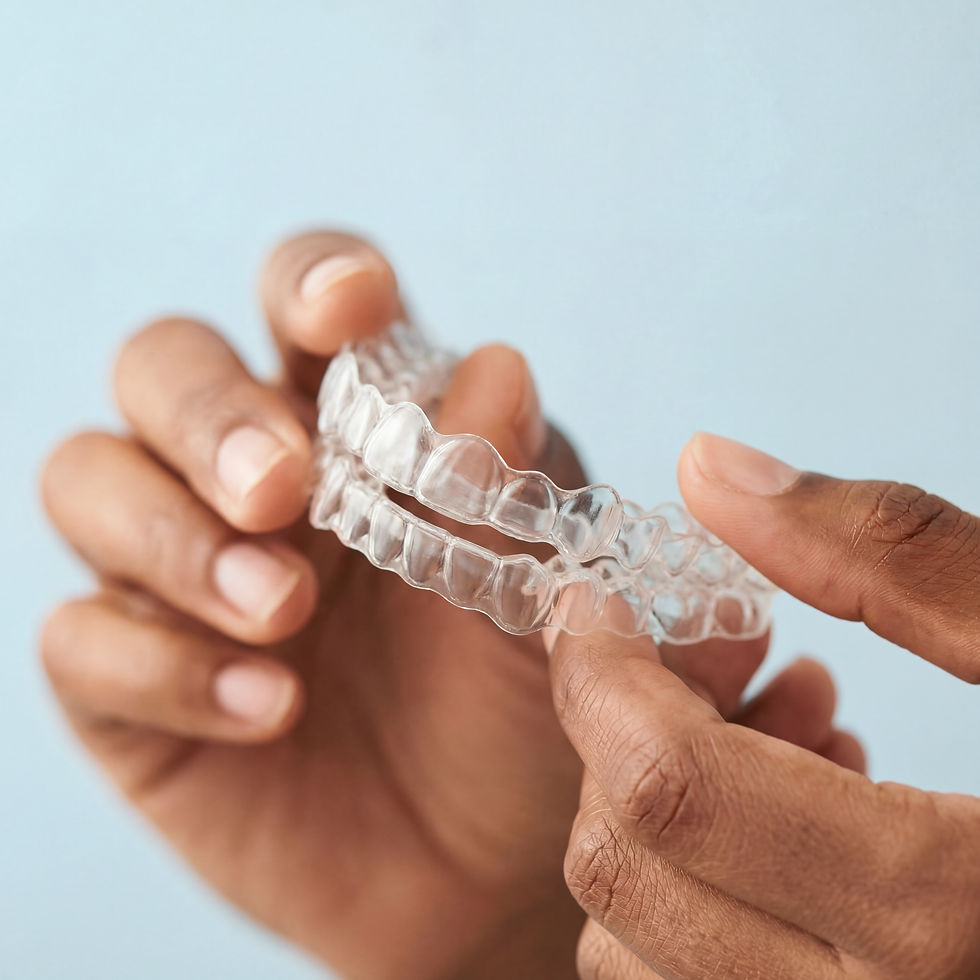
The first is fit. We take a digital scan of your teeth with an intraoral scanner (no goopy impression tray) and make custom trays from it. Those trays hug every surface of every tooth, so the gel sits evenly from edge to gumline and between the teeth, and it stays off your gums. Because the fit is controlled, we can use a stronger gel safely. You wear the trays at home on a schedule that fits your sensitivity, and the result comes in evenly.
The second is concentration. In-office whitening uses a higher strength gel with your gums covered and protected, in a single visit. It is the biggest jump you can get in one sitting, which is why people choose it when a wedding or a reunion is close.
We offer all three here in Bellevue: in-office whitening, take-home whitening strips, and custom take-home trays. The gel for all of them is Opalescence, and we keep it stocked all year, so you are not waiting on a seasonal order or a promotion to get started or to pick up a touch-up refill. The tradeoffs are plain. Professional whitening costs more than a box of strips and takes a visit or two. In exchange you get an even result, a faster one, and a dentist managing the sensitivity instead of guessing on your own. Ask us which one fits your teeth and your calendar, because the answer is different for different people.
Which one should I pick?
Here is how I walk through it with patients.
If your teeth are mildly yellow, nothing is sensitive, and there is no deadline, start with strips, whether from the pharmacy or the ones we carry. Save the money, see how far they get you, and come talk to me if you want more.
If you already tried strips and they plateaued, came out uneven, or made your teeth ache, custom trays are the next step. They fix all three of those problems at once, and the trays last for years of touch-ups. The same goes if you are someone who whitens a lot. At that point trays are worth the investment, because you are buying small gel refills instead of a new box of strips every time, and the result is more even each round.
If you have an event in two weeks, in-office whitening gets you most of the way there in one visit, and a set of trays afterward holds the result and finishes the job.
If your teeth have a gray tone rather than yellow, or one tooth is noticeably darker than its neighbors, talk to us before you buy anything. Gray staining and single dark teeth usually come from inside the tooth, often from an old injury or a nerve that has died, and peroxide on the outside does not reach it. That is a different problem with a different fix, and strips will only leave you frustrated.
Why does whitening make teeth sensitive, and how do we handle it?
Peroxide works by passing through the enamel, which is porous at a microscopic level. On its way in, it irritates the nerve in the center of the tooth, and the nerve reports that as a sharp zing with cold air or cold water. For most people it lasts a day or two after a session and then settles down as the tooth rehydrates.
We can take the edge off it. Brushing with a desensitizing toothpaste for a week before you start calms the nerve ahead of time. Shorter sessions, or a day off between sessions, give the tooth time to recover. A fluoride treatment afterward helps seal the surface, and I wrote about what the research actually says about fluoride if you have questions there. And if your teeth are already sensitive to cold before you whiten, that is worth a conversation first, because sensitivity is usually a sign of something we should look at anyway.
Why should you get a checkup before whitening?
Whitening is the most conservative cosmetic treatment there is, because it removes nothing from the tooth.
A cavity, a crack, an exposed root, or inflamed gums can turn whitening into a painful experience, and worse, the pain can hide the real problem for a while. Peroxide on an open cavity hurts for the same reason cold does: the nerve is exposed. So before you start, a quick exam (or a new patient visit if you are new to us) makes sure there is nothing to fix first.
The other reason is matching. Whitening changes natural tooth structure only. It does not change composite fillings, crowns, or veneers, so if you have older work on your front teeth, it will stay the shade it is while the teeth around it get lighter. The order matters: whiten first, let the shade settle for a couple of weeks, and then match any new work to the new color. That applies whether we are talking about veneers, a same-day crown, or a small bonded filling on a front tooth.
How long does it last, and how do you keep it?
Anywhere from several months to a couple of years, and the range depends almost entirely on habits. Coffee, tea, red wine, and tobacco are the main things that bring stain back. You do not have to give them up, but rinsing with water afterward and keeping up with cleanings slows the drift.
Maintenance is easy if you have trays. A night or two of gel every few months brings the shade right back, and that is the main reason I like trays as the long-term tool even for people who started in the office.
One more thing, because people ask. More is not whiter. Enamel has a natural stopping point, and pushing past it does not make teeth brighter, it makes the edges look thin and translucent, almost blue-gray. When you reach the shade where your teeth look clean and bright and still look like teeth, stop there.
Teeth Whitening FAQ
Does whitening damage enamel?
Used as directed, no. Peroxide breaks down stain molecules inside the enamel without removing enamel itself. Problems come from overuse, from whitening over a cavity or an exposed root, or from abrasive products that scrub rather than bleach. A checkup first and a sensible schedule keep it safe.
How white can my teeth get?
That depends on your starting shade and the type of stain. Yellow stain from food and age responds very well. Gray stain, or stain from inside the tooth, responds less. Everyone has a natural ceiling, and the goal is bright and healthy-looking, not paper white.
Can I whiten if I have crowns or veneers?
You can, but only the natural teeth will change. Crowns, veneers, and fillings keep their original shade. If the work is on your front teeth, we talk about it first so you do not end up with a mismatch, and if you are planning new work, whitening comes before it. Whitening often matters more once you have veneers, not less, because the veneers will hold their color for years while the natural teeth next to them slowly pick up stain, and a maintenance session keeps the neighbors matching.
Does charcoal or whitening toothpaste actually whiten teeth?
Whitening toothpastes remove surface stain with mild abrasives, so teeth can look a little brighter, but they do not change the underlying shade the way peroxide does. Charcoal products are abrasive enough that I would skip them, because scrubbing enamel thinner is the opposite of what you want. For a real shade change, you need peroxide in contact with the tooth.
How often can I whiten?
A full course to get started usually takes a couple of weeks, or a couple of months if sensitivity means going slower. After that, a maintenance session every month or two is enough to keep up with the natural staining from coffee, tea, and everyday life. If you find yourself whitening constantly to hold a shade, that is a sign the habits or the method need adjusting, not that you need more peroxide. Your teeth will tell you with sensitivity when you are overdoing it.
If you are not sure which option fits, or you want healthy teeth confirmed before you start, call or text 425.643.5778 or request an appointment. A quick look now is the difference between a result you love and two weeks of sensitivity for nothing.
Reviewed by Dr. Victor Bauer, DDS. Last updated October 2026.
Dr. Victor Bauer, DDS is a general dentist and the owner of Family Dental Care of Bellevue, located in the Factoria neighborhood of Bellevue, WA. He provides comprehensive family care including dental implants, Invisalign, and same-day CEREC crowns. Questions about your smile? Call 425.643.5778 or request an appointment.